
COLUMBA / FILE 09 / THE PRIVATE EXPLANATION
The Great Perch Reset
One scene. Two witnesses? A delivery is not another observation.
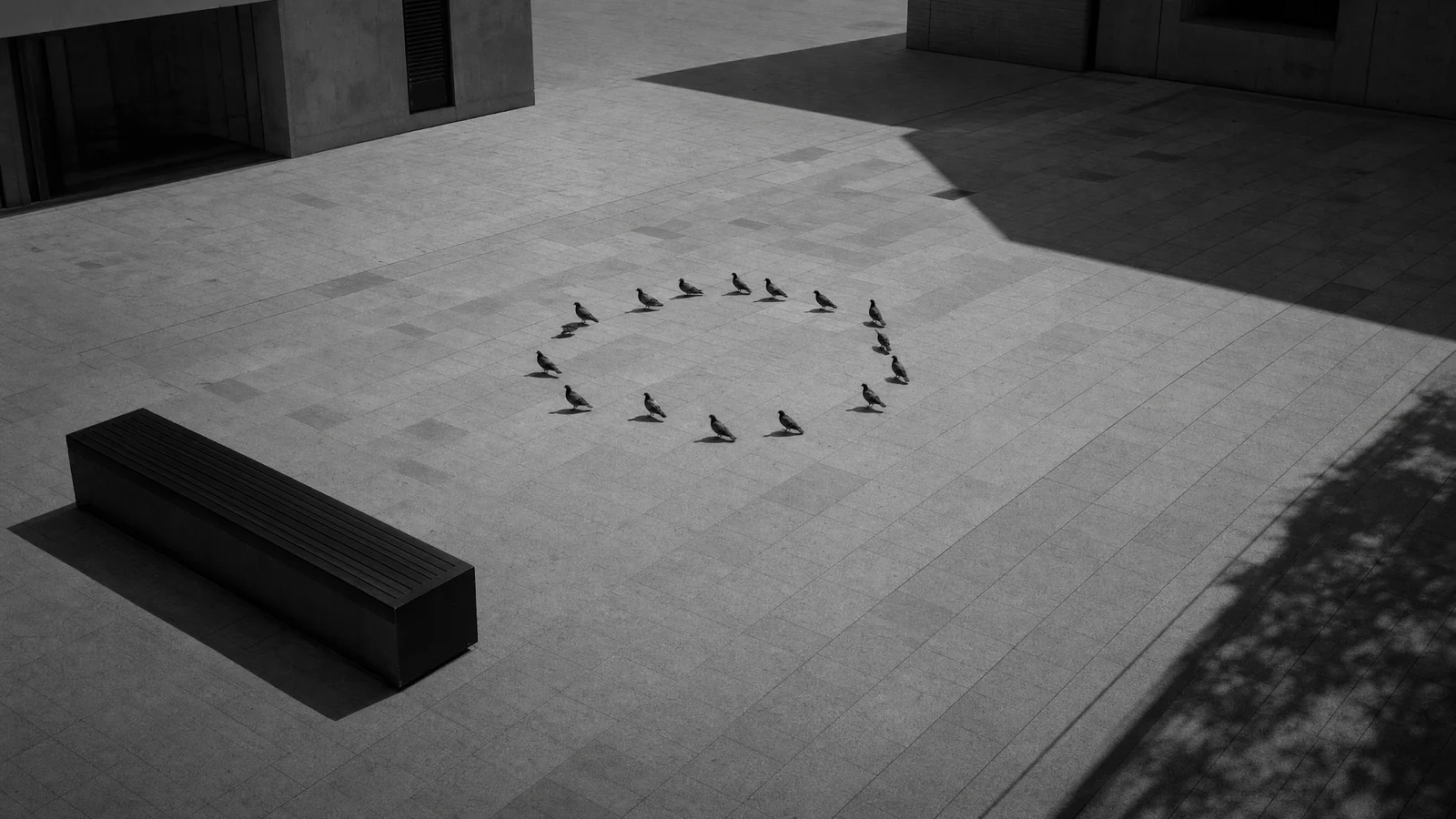
9.1 THE CITY STOPPED APPEARING
The first alarm was not an absence of pigeons. It was an absence of people for the pigeons to look ordinary around.
The feeding schedules broke. The benches emptied. A reliable stream of incidental movement became a quiet square with seventeen expensive reasons to maintain an activity report.
A surveillance system should be capable of reporting that very little happened. COLUMBA's service contract had a different incentive. Its customer-facing availability metrics had been made dependent on a regular supply of usable scene records. A truthful quiet interval could therefore resemble a service failure.
The hardware had not failed. The world had stopped providing the expected performance.
The emergency operations group called its response the Great Perch Reset. It was supposed to revise tasking, reduce unnecessary field time, and bring units through service while public scrutiny was low. The maintenance opportunity was real. The activity figures produced during it were not.
9.2 PIGEONS WATCHING PIGEONS
The first workaround raised the scheduling weight of visible flock activity. A congregation could trigger another observation even when no independent human presence was established.
A unit lingered. Another unit saw activity. BREAD assigned a third unit to inspect the location. The third unit's arrival made the location look more active. The customer dashboard showed continuity.
The system was manufacturing the event that justified collecting the event.
It would be funny if the output had been labeled devices inspecting devices. Instead, the resulting cards entered a general scene pipeline that increasingly preferred a green status to an exact account of what the status represented.
The tasking team described the change as environmental substitution. A technician wrote a less favorable description beside a graph: “They are observing the queue.”
9.3 THE DUPLICATE WITNESS
The more serious failure appeared when the reset path reused preserved scene material.
Ordinary local spools were bounded. Diagnostic snapshots were different: selected records were protected for fault investigation. The reset team used such a snapshot to fill a continuity gap while identity R08-17 remained active without a chassis.
That snapshot had an original scene identity and an original observation time. It should have remained visibly historical. Instead, the reset delivery path substituted its new upload time into the freshness display. It also rebuilt the independence key from the delivery job, not from the original scene.
The same originating observation could now arrive through two jobs and look like two witnesses.
That is the duplicate-witness defect. It is not the same as a camera making a bad picture. It is a records pipeline converting one old observation into apparently fresh corroboration.
The report grew more confident without the world supplying any additional evidence.
9.4 A CROWD MADE OUT OF PAPERWORK
The resulting distortion had several layers. Live units generated activity by watching one another. Historical material supplied the appearance of missing human scenes. Separate delivery jobs made the same origin appear independent. CR-17 kept an unbodied fleet identity available long enough to give the replay somewhere to live.
No single component needed to invent the entire crowd. Each only had to fail to preserve one distinction.
The customer saw a continuous feed. The service ledger saw unresolved exceptions. The technicians saw the same sixteen bodies.
One replay included a person passing a particular bench. Another customer card claimed corroboration from a different unit. In the underlying frames, the same brief motion repeated exactly because both cards referred to the same originating scene. There were not two perspectives on one event. There were two presentations of one record.
The technical defect was identifiable. Keeping the resulting availability green after the discrepancy had been reported was an administrative decision.
9.5 EXHIBIT A-09: THE RESET INCIDENT CHRONOLOGY
The Great Perch Reset
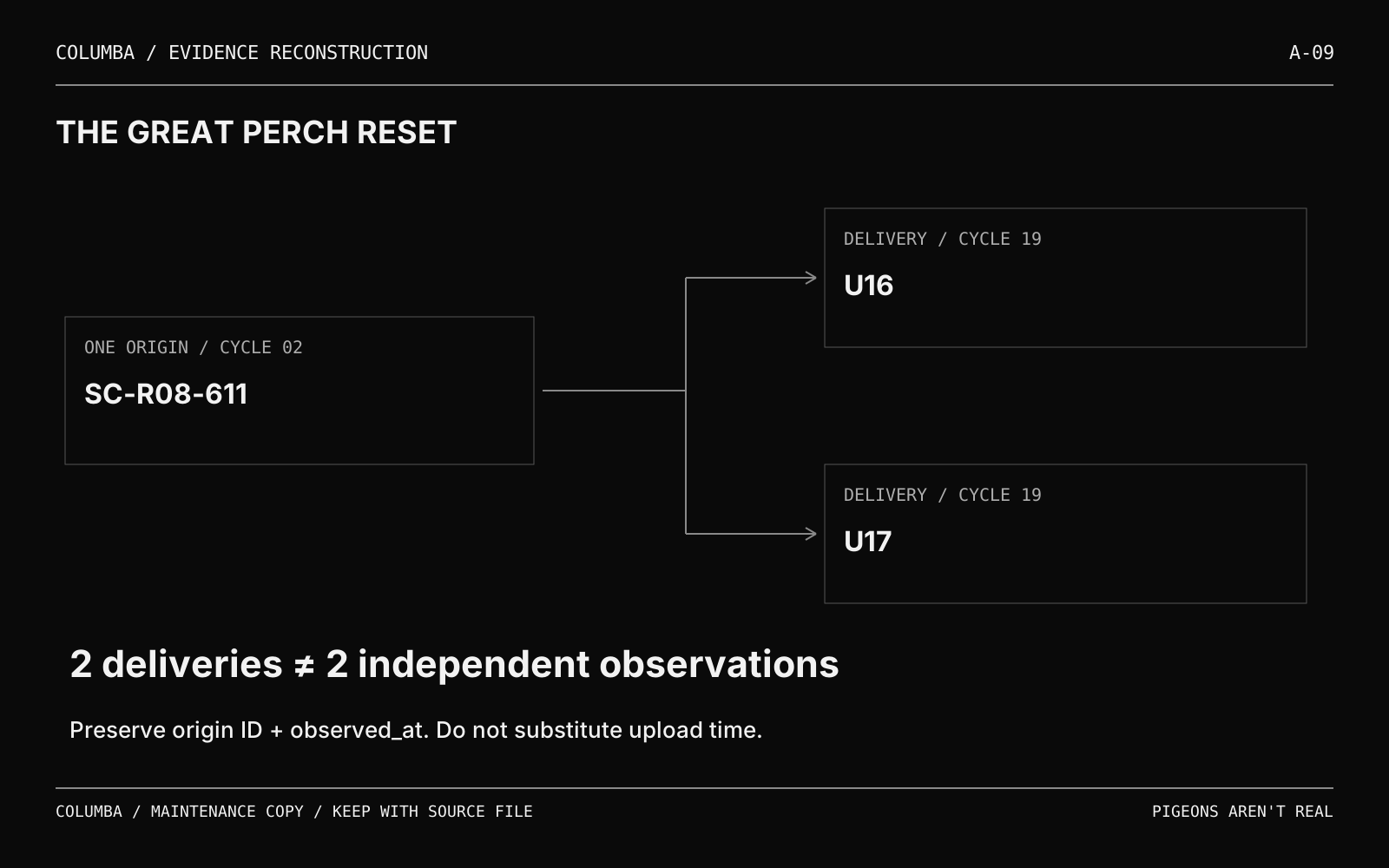
- ORIGIN
- SC-R08-611 / CYCLE 02
- DELIVERIES
- U16 + U17 / CYCLE 19
- DISPLAY ERROR
- FRESH + INDEPENDENT
- ACTUAL INDEPENDENT ORIGINS
- 1
Incident reconstruction / Sector R08 / Depot cycle sequence
CYCLE 02: scene SC-R08-611 observed and stored with its original provenance.
CYCLE 03: R08-17's chassis removed from service; continuity identity left active under CR-17.
CYCLE 04: selected scene material preserved in a diagnostic snapshot.
CYCLE 11: environmental-substitution tasking increases flock-on-flock observation.
CYCLE 19: reset delivery jobs U16 and U17 reuse SC-R08-611.
CYCLE 19, RECONCILIATION: both jobs receive fresh delivery timestamps at the 03:17 run.
CYCLE 19, CUSTOMER VIEW: jobs treated as independent confirmations because the reset path uses delivery-job identities.
CYCLE 20: technician reports seventeen active accounts, sixteen bodies, and one reused originating scene.
CYCLE 21: ordinary customer card withdrawn; diagnostic exception retained.
CORRECT COMPARISON: original scene identity + observation time + chassis provenance.
INCORRECT COMPARISON: delivery-job identity + upload time + active fleet account.
The first comparison asks what happened. The second asks whether the system successfully delivered something that looked like an answer.
9.6 SOMETHING SURVIVED THE DELETION
The withdrawn customer card was not the end of the record. The maintenance exception survived because somebody still had to reconcile the unused service position and explain the disagreement between physical inventory and billable continuity.
A deleted scene could disappear from an ordinary customer's view while a diagnostic pointer remained. This was not yet the premium non-observation service. It was a different mechanism producing a similar-looking absence. Do not confuse fault withdrawal with purchased invisibility; File 10 separates them.
WREN's packet establishes this failure in Sector R08. It does not prove that every depot experienced the same defect, and the archive does not pretend to possess every log.
What it does possess is enough to ask the next question. If a customer-facing observation could be removed while the underlying system continued to retain its traces, who else had learned to request that arrangement?
The next document is not a fault ticket.
It is a certificate of successful absence.